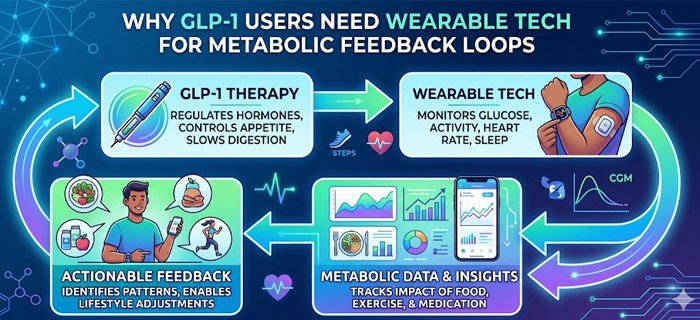
The rise of GLP-1 receptor agonists has revolutionized the treatment of obesity and metabolic dysfunction.
However, medication is only one piece of the puzzle. To achieve peak results, patients are increasingly turning to wearable technology to create real-time metabolic feedback loops. This integration of medicine and data allows for a more personalized, responsive, and ultimately successful weight loss journey in the modern era.
By bridging the gap between clinical weight loss treatment and daily lifestyle habits, wearables provide the visibility needed to understand how the body responds to medication in real-time. This synergy transforms a standard prescription into a dynamic, data-driven health strategy.
The Science of Metabolic Feedback Loops
A metabolic feedback loop is the process of monitoring physiological data to adjust behaviors that influence health outcomes. When a patient uses a GLP-1 medication, their internal chemistry changes, affecting insulin sensitivity and gastric emptying.
Wearable tech, such as continuous glucose monitors (CGMs) or smartwatches, captures these shifts. This data helps users understand exactly how their body processes specific nutrients while on the medication.
Without this feedback, patients often fly blind, relying solely on the scale. Feedback loops provide immediate reinforcement; seeing a stabilized blood sugar curve after a high-protein meal encourages the user to repeat that behavior. This creates a psychological and physiological “win” that strengthens the commitment to the treatment plan and helps the patient master their unique metabolic rhythm.
Monitoring Glucose Stability with CGMs
While originally designed for diabetics, Continuous Glucose Monitors (CGMs) have become a vital tool for anyone on a GLP-1 protocol. These devices provide a 24/7 view of blood sugar levels, revealing how different foods and activities cause fluctuations.
For a GLP-1 user, maintaining stable glucose levels is essential for avoiding the “crashes” that lead to cravings and overeating.
The medication works to flatten these curves, but the CGM proves it. When a user sees a visual representation of their glucose staying within a healthy range, it validates the efficacy of the medication and their dietary choices. This real-time data allows for “on-the-fly” adjustments, such as adding a short walk after a meal if levels begin to trend upward, further enhancing the drug’s metabolic benefits.
Tracking Resting Heart Rate and Autonomic Health
GLP-1 medications can sometimes lead to slight elevations in resting heart rate (RHR). Wearable devices like Oura rings or Apple Watches allow users to monitor these cardiovascular changes closely. By tracking RHR and heart rate variability (HRV), patients can gain insights into how their autonomic nervous system is responding to the treatment and general life stress.
Consistent monitoring ensures that any significant deviations are caught early and discussed with a healthcare provider. Furthermore, tracking HRV helps users determine their “readiness” for exercise. If the medication or a lack of sleep has put the body under stress, the wearable will suggest a recovery day, preventing burnout and ensuring that physical activity remains a sustainable part of the long-term metabolic plan.
Protein Intake and Muscle Mass Preservation
One of the primary concerns with rapid weight loss through GLP-1s is the potential loss of lean muscle mass. To combat this, users must prioritize high protein intake and resistance training. Wearables integrated with smart scales and body composition analyzers help track these metrics. By monitoring the ratio of fat loss to muscle retention, users can adjust their lifestyle support in real-time.
If a wearable indicates a drop in muscle mass, the user knows they must increase their protein consumption or adjust their strength training routine. This feedback is critical for ensuring that the weight lost is primarily adipose tissue, which is the key to improving long-term metabolic rate and preventing the weight regain that often follows muscle loss.
Optimizing Sleep Quality for Hormonal Balance
Sleep is the cornerstone of metabolic health. Poor sleep quality can interfere with the body’s hormonal balance, specifically increasing cortisol and ghrelin, which can work against the effects of GLP-1 medications. Wearable tech provides detailed sleep architecture reports, showing deep, light, and REM cycles. This allows users to identify habits—like late-night blue light exposure—that sabotage their rest.
By utilizing sleep tracking data, users can create an environment and routine that maximizes recovery. Stable sleep patterns ensure that the body is primed to respond to the medication’s appetite-regulating signals. When a patient is well-rested, they possess the mental clarity and willpower needed to stick to their nutritional goals, making the GLP-1 therapy significantly more effective.
Managing Gastric Side Effects Through Habit Tracking
Many GLP-1 users experience gastrointestinal side effects such as nausea or delayed digestion. Wearable apps often include food and symptom logging features that, when paired with physiological data, help identify “trigger foods.” For instance, a user might notice that high-fat meals late in the evening correlate with poor sleep and increased nausea the following morning.
Identifying these patterns allows the user to modify their environment and eating schedule. Instead of feeling like the side effects are random or unavoidable, the data empowers the patient to take control. This reduction in friction increases medication adherence, as patients feel more comfortable and capable of managing their physical response to the treatment.
Activity Levels and Non-Exercise Activity Thermogenesis (NEAT)
While structured exercise is important, Non-Exercise Activity Thermogenesis (NEAT)—things like walking, cleaning, and standing—accounts for a large portion of daily energy expenditure. Wearables encourage users to stay active throughout the day by providing “move” reminders and step tracking. For GLP-1 users, maintaining a high level of NEAT is a powerful way to supplement the medication’s effects.
Seeing a daily step count or calorie burn goal acts as a constant, low-pressure motivator. It turns weight management into a game of consistency rather than a series of intense, unsustainable efforts. By keeping movement high through the feedback of a wearable, patients ensure that their metabolism remains active, even during the periods of the day when they aren’t at the gym.
The Future of Data-Driven Weight Loss
The combination of GLP-1 therapy and wearable technology represents the future of precision medicine. We are moving away from a “one size fits all” approach toward a model where every patient has the tools to be their own data scientist. This synergy doesn’t just help people lose weight; it helps them understand the complex machinery of their own metabolism.
As these technologies continue to evolve, the feedback loops will become even more sophisticated, potentially predicting metabolic hurdles before they occur. For the 2026 GLP-1 user, wearable tech is no longer an optional accessory; it is a fundamental component of a successful, sustainable, and scientifically backed transformation. By embracing the data, users can ensure that their hard work and medical investment lead to the healthiest version of themselves.